
P2 respirator
Woodchips can release organic dust and fungal spores when disturbed. When dust exposure is a concern, wear a properly fitted P2 particulate respirator.
A loose surgical mask does not offer equivalent protection.


Your practical guide to receiving, moving and spreading arborist woodchips safely. Better tools, safer practices and healthier gardens.
Explore the guide ↓Arborist woodchips help suppress weeds, retain moisture, moderate soil temperatures and gradually add organic matter to the soil.
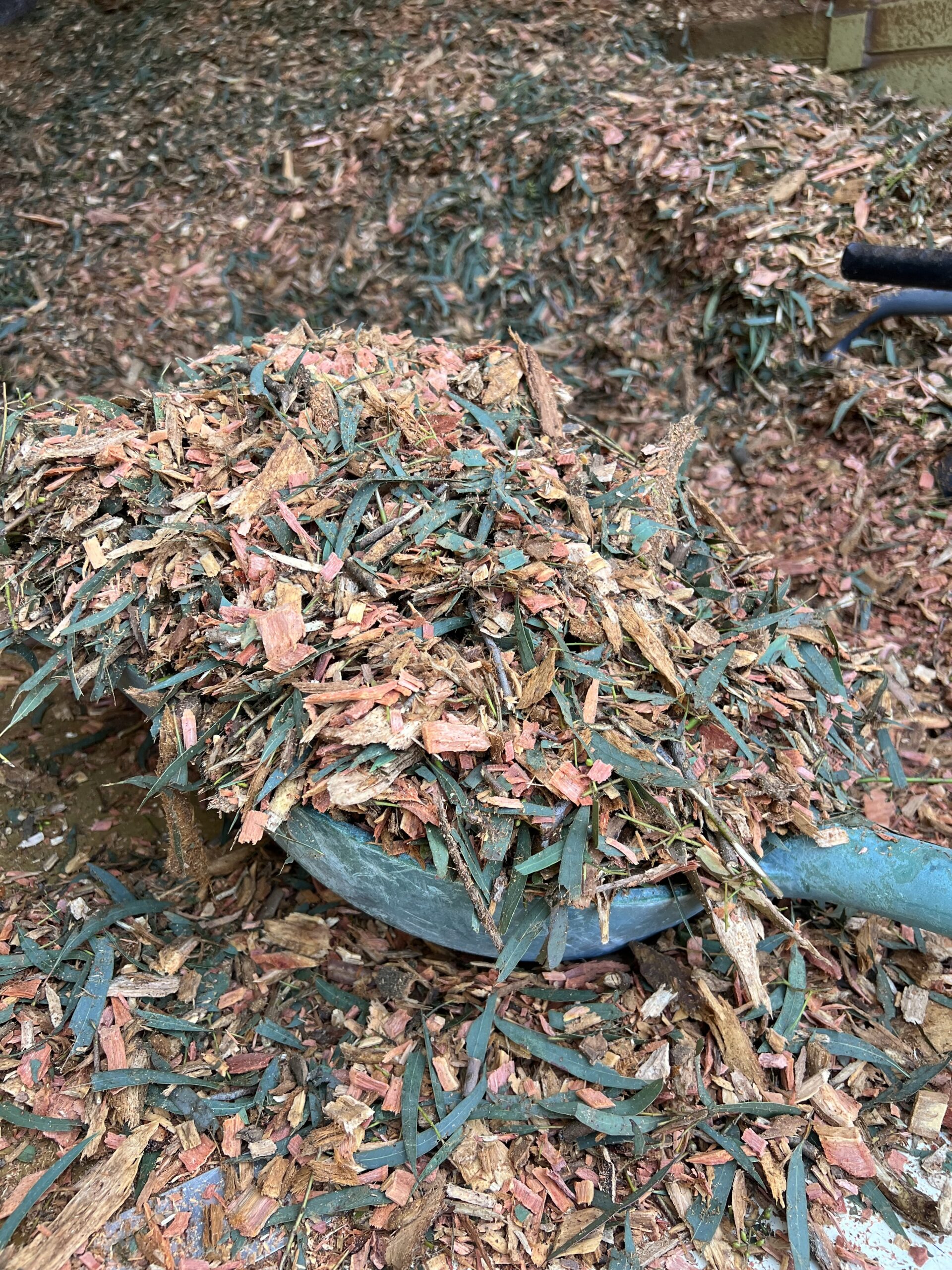
Moving a truckload is physical work. Fresh woodchips can be heavy, dusty and awkward. A little preparation makes the job safer and easier.
The right protective equipment can help reduce exposure to dust and prevent avoidable injuries.
Woodchips can release organic dust and fungal spores when disturbed. When dust exposure is a concern, wear a properly fitted P2 particulate respirator.
A loose surgical mask does not offer equivalent protection.

Safety glasses help protect your eyes from flying chips, dust and debris when shovelling or raking.

Wear sturdy gloves, enclosed non-slip footwear and appropriate work clothing. Protect yourself from the sun and stay hydrated.
Choose equipment suited to moving bulky, lightweight material rather than compact soil.
A broad, lightweight moulded plastic scoop shovel, such as a Cyclone wide-mouth model, helps move loose woodchips efficiently.

A wide-tine mulch or bedding fork is useful for lifting fluffy, stringy woodchips that can be awkward to scoop with a shovel.

Use a sturdy wheelbarrow for manageable loads and a landscape rake to distribute the chips evenly.
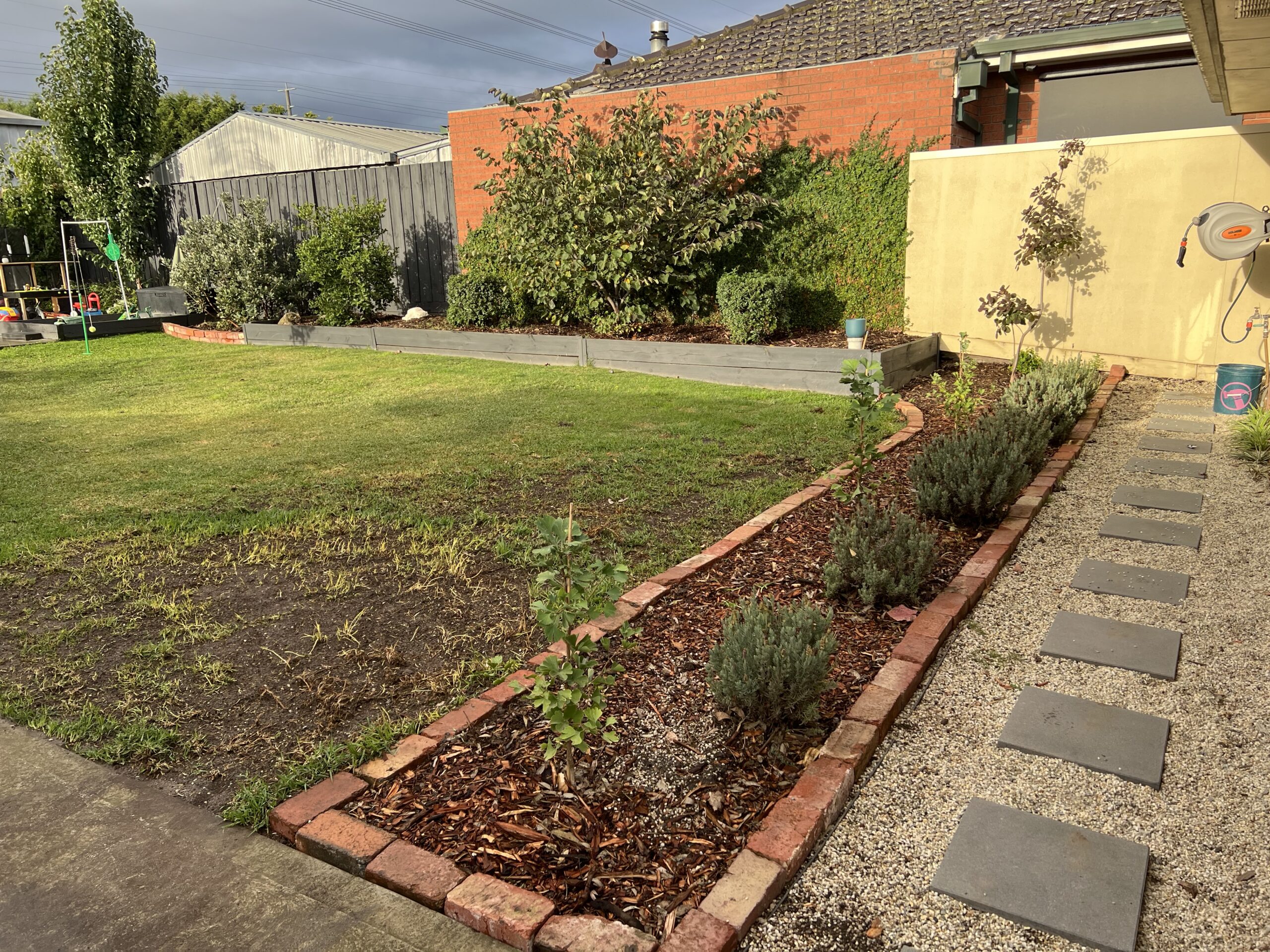
Mulch suppresses many weeds by blocking sunlight and gradually contributes organic matter as it decomposes.
A generous initial layer in suitable open areas where weed suppression is the goal.
A deeper initial layer may be useful in some unplanted areas. Monitor drainage and moisture.
A moderate layer is generally more appropriate around established plants.
Arborist woodchips gradually break down on the soil surface, supporting soil organisms and improving soil structure.
Avoid mixing large amounts of fresh woody chips into the soil, where decomposition can temporarily reduce nitrogen availability.
Top up the layer as it settles and decomposes.

Remove trip hazards and watch for slippery or uneven ground.
Don’t overload your wheelbarrow, particularly with wet woodchips.
Move your feet instead of twisting your body while lifting.
Drink water and avoid heavy work during extreme heat.
Watch for rubbish, sharp objects or unsuitable material.
A truckload is a big job. Share the workload.
Agree on a safe drop location with the arborist before delivery.
Check overhead powerlines, low branches, soft ground and access restrictions. Keep children, pets and bystanders clear of the vehicle.
Never stand behind a tipping truck or beneath a raised tipper body. Wait until unloading is complete before approaching the mulch pile.
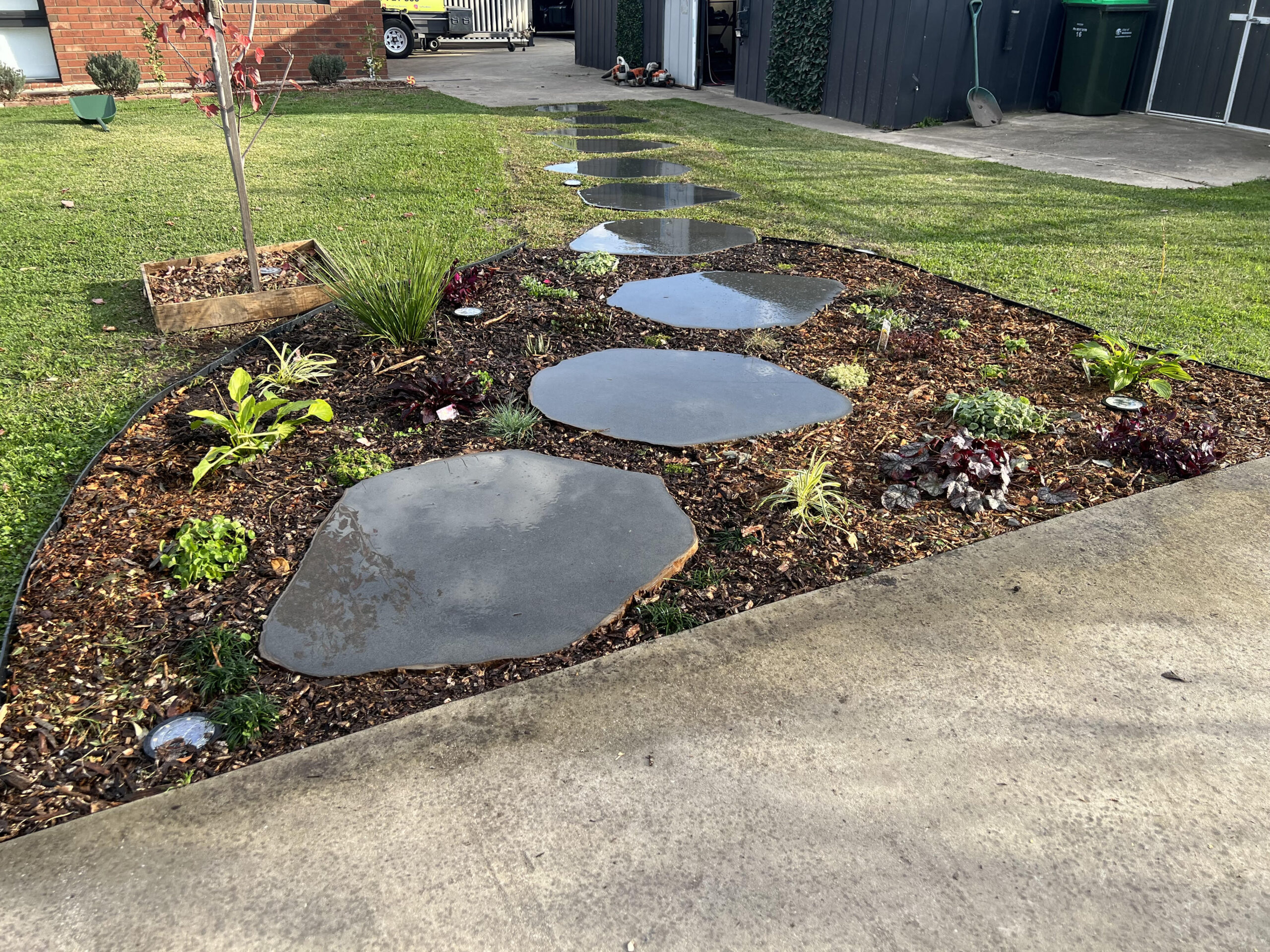
MulchSpot connects people who want arborist woodchips with the people who have them.
Reuse a valuable resource, reduce unnecessary transport and help build healthier gardens.
Deliveries depend on arborist availability and are not guaranteed.
Explore MulchSpot →Safety disclaimer: General information only. Follow relevant Australian safety requirements and seek professional advice where needed.
Photography: MulchSpot-supplied photographs and Wikimedia Commons contributors. Stock-image sources: PPE collection, safety glasses, worker PPE, garden tools, wheelbarrow, garden mulch. Check each source page for the applicable author attribution and licence before publishing.
Request quotes for weeding, garden tidy-ups and mulch spreading, or explore landscaping and new garden beds. Tell contractors what needs doing and add at least two photos or videos.
Free to request, with no obligation to hire. Up to three contractors can unlock your request; availability and responses vary. Any work you book is paid directly to the contractor.